

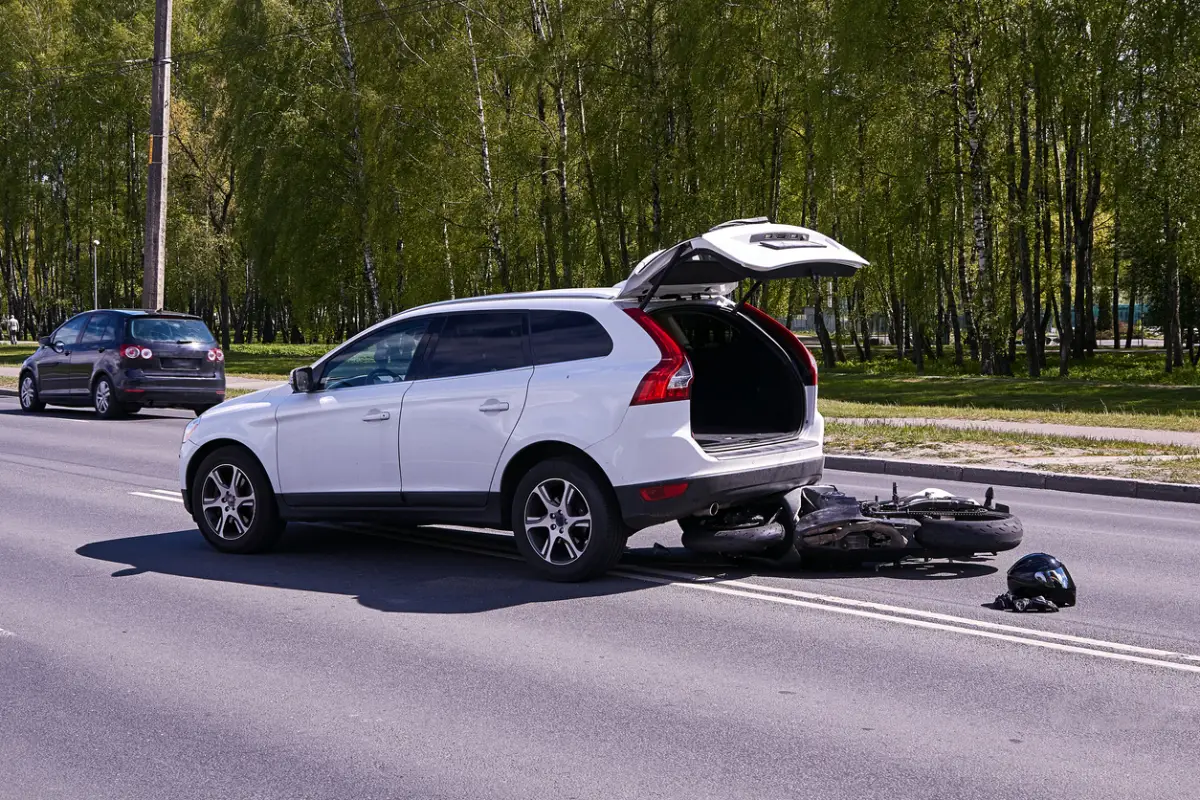


Motorcycle accidents can unfold in a matter of seconds, leaving behind serious injuries, property damage, and legal complications. But what happens when a motorcycle hits a car? The aftermath can vary significantly depending on how the collision occurred, the circumstances surrounding the crash, and California’s comparative fault laws.
Whether you’re a motorcyclist or a driver, understanding your legal rights and responsibilities is essential, especially when navigating motorcycle accident claims. For injured riders and drivers seeking legal guidance, working with an experienced motorcycle accident lawyer in San Francisco can be a critical first step. If you’ve been involved in a crash, the personal injury attorneys at Delfino Green & Green are ready to help you understand your options and fight for the compensation you deserve.
What Happens When a Motorcycle Hits a Car?
The moments following a motorcycle-car collision are a blur of confusion, adrenaline, and often, immense pain. But in that chaos, a crucial process begins: the untangling of events to determine who is legally responsible. A common misconception is that if a motorcycle hits a car, the motorcyclist is automatically at fault. This is simply not true. The circumstances leading up to the crash are what truly matter.
Determining fault in a motorcycle accident is the cornerstone of any subsequent insurance claim or legal proceeding. This determination dictates whose insurance company will be responsible for covering damages and injuries. Unlike many car-on-car collisions, when a motorcycle hits a car, the motorcyclist is often at higher risk for serious injuries due to the lack of physical protection.
Determining fault in motorcycle accidents requires a fact-based analysis of what happened leading up to the crash. These collisions often occur due to:
- Improper lane changes
- Failure to yield
- Lane splitting in heavy traffic
- Inattentive or distracted driving
- Misjudging speed or distance
Immediately following a crash, both parties should take specific steps to ensure their safety and preserve vital evidence for any legal or insurance claims. These include:
- Seeking immediate medical attention
- Contacting law enforcement
- Documenting the accident scene
- Gathering witness statements
- Notifying insurance companies
Taking these steps promptly helps build a stronger foundation for injury claims and can aid in determining who was legally responsible.
Determining Liability in Motorcycle Accidents
So, who is at fault in a motorcycle-car crash? The answer lies in the evidence. Liability isn’t assigned based on assumptions, vehicle damage, or the driver’s story. It is meticulously pieced together through a thorough investigation. Immediately after a crash, it’s vital to know what to do next.
Liability in a motorcycle-car collision hinges on who acted negligently or violated traffic laws. For instance, if a motorcyclist runs a red light and crashes into a vehicle lawfully crossing the intersection, liability will likely fall on the motorcyclist. However, if the car driver failed to yield or was distracted while making a turn, the fault may lie with them or be shared.
The priority is always safety and medical attention. However, the steps taken to preserve evidence are also critical. A proper investigation into a motorcycle collision involves several key components:
- Police Reports: The responding officer’s report is often the first official record of the incident. It will contain details about the scene, vehicle positions, initial statements from those involved, and the officer’s preliminary assessment of fault.
- Witness Statements: Independent witnesses can provide an unbiased account of what happened. Their testimony can be incredibly powerful in corroborating your version of events and countering any false narratives from the other driver.
- Accident Scene Evidence: Photographs and videos of the crash scene are invaluable. They can capture the final resting positions of the vehicles, skid marks, road conditions, traffic signals, and property damage. This evidence can help a crash reconstructionist determine speeds and points of impact.
- Traffic Camera Footage and Surveillance: Many intersections and businesses have cameras that may have recorded the accident. This footage provides an objective, indisputable view of the events leading up to the collision as it occurred.
Insurance companies are notorious for trying to minimize their payouts. They may attempt to shift blame onto the motorcyclist, often playing on outdated biases against riders. This is where having a skilled motorcycle vs car accident attorney in California becomes a necessity. Your attorney will act as your advocate, gathering all necessary evidence, speaking to witnesses, and negotiating aggressively with the insurance adjusters to ensure you are not unfairly blamed and that you receive fair compensation.
Understanding Comparative Negligence in California
Under California law, the comparative negligence rule allows plaintiffs to recover damages even if they were partially at fault. For example, if a motorcyclist is found 30% at fault and the car driver 70%, the rider may still recover 70% of the total damages awarded.
Here’s a practical example: Imagine you are riding your motorcycle slightly over the speed limit when a car suddenly makes an illegal left turn in front of you, causing a collision. A jury or insurance company might determine that the car’s driver was 80% at fault for the illegal turn, but that you were 20% at fault for speeding. If your total damages (medical bills, lost wages, pain and suffering) amounted to $100,000, your final compensation would be reduced by your percentage of fault (20%). You would therefore be able to recover $80,000.
This rule is a double-edged sword. While it allows for recovery even with a partial fault, it also gives insurance companies a powerful tool to prove fault and reduce the amount they have to pay. They will scrutinize your every action leading up to the bike accident to assign you the highest possible percentage of fault. This is why understanding comparative negligence is crucial.
A skilled California motorcycle accident lawyer will build a powerful case to minimize your assigned percentage of fault, fighting to maximize the compensation you rightfully deserve. They can make a significant difference in the outcome of your case by effectively arguing the facts and applying the law in your favor.
The Role of a Law Firm in Motorcycle-Car Accident Cases
After a motorcycle-car collision, legal representation can make a significant difference in case outcomes. A seasoned motorcycle accident lawyer can:
- Conduct a thorough investigation
- Collect and preserve crucial evidence and medical records
- Negotiate with insurance adjusters
- Represent clients in court if necessary
Importantly, many law firms—including Delfino Green & Green—work on a contingency fee basis, meaning clients pay nothing upfront and only pay legal fees if their case is successful.
A law firm can also connect clients with expert witnesses such as accident reconstructionists, medical professionals, and vocational experts, further strengthening their compensation claims.
California Motorcycle Accident Laws and Regulations
Understanding California-specific laws is crucial for anyone involved in a motorcycle accident. Key regulations include:
- Helmet Laws: All motorcycle riders and passengers in California are required to wear DOT-compliant helmets. Failure to do so can not only increase injury severity but also impact fault assessment and damages.
- Lane Splitting Guidelines: While legal, lane splitting must be done safely and prudently. Unsafe lane splitting can shift liability toward the motorcyclist.
- Traffic Law Compliance: Motorcyclists must obey all standard traffic rules, including speed limits, signal usage, and right-of-way regulations.
Breaking any of these laws can complicate liability and reduce potential compensation, especially under California’s comparative negligence system.
Causes and Consequences of Motorcycle Accidents
To understand who is liable when a motorcycle hits a car, one must look at the common causes of these devastating incidents. While every accident is unique, many fall into recognizable patterns of negligence.
- Lane Splitting: California is one of the few states where lane splitting (riding between lanes of slowed or stopped traffic) is legal. However, it must be done safely and prudently. If a motorcyclist is lane splitting recklessly and an accident occurs, they may bear some or all of the fault. Conversely, if a car driver changes lanes without looking and hits a motorcyclist who was lane splitting safely, the driver is likely to be found negligent.
- Motorcycle Rider Error: Actions like excessive speeding, weaving through traffic, misjudging turns, or riding under the influence can certainly place fault on the motorcyclist. These behaviors increase risk and can be the primary cause of a crash.
- Car Driver Negligence: This is the most frequent cause of motorcycle crashes. Car and truck drivers often fail to see motorcyclists due to their smaller profile. Common forms of driver negligence include:
- Failure to Yield: Making left turns in front of an oncoming motorcycle is a classic and often fatal cause of collisions.
- Unsafe Lane Changes: Drivers who do not check their blind spots before merging or changing lanes.
- Opening Car Doors: A driver parking on the street who opens their door into the path of an oncoming rider can be held liable.
- Distracted Driving: Texting, talking on the phone, or interacting with a vehicle’s infotainment system pulls a driver’s attention from the road, with deadly consequences.
- External Factors: Not all accidents are caused by driver or rider error. Poor weather conditions, road defects like potholes or loose gravel, and malfunctioning traffic signals can also be contributing factors. In these cases, liability might even fall on a government entity responsible for road maintenance.
The consequences of these vehicle accidents are disproportionately severe for the motorcyclist. Lacking the protection of a steel frame, airbags, and seatbelts, a rider often sustains catastrophic injuries, including traumatic brain injuries, spinal cord damage, broken bones, and severe road rash. These injuries result in staggering medical bills, long-term rehabilitation needs, and significant lost income.
The Motorcycle-Car Accident Case Process
Navigating a motorcycle accident case involves several critical steps:
- Investigation and Evidence Collection: Attorneys gather police and accident reports, scene photos, video surveillance, and witness statements.
- Medical Evaluation: Victims must undergo comprehensive medical examinations to document severe injuries and forecast future treatment needs.
- Insurance Negotiations: Insurers often attempt to minimize payouts. A skilled attorney counters lowball offers and negotiates fair settlements.
- Litigation (if needed): If negotiations fail, the case may proceed to court. Attorneys prepare filings, discovery, depositions, and trial arguments.
Throughout the process, legal representation ensures that every aspect of the case—liability, damages, and legal compliance—is properly addressed.
Conclusion and Next Steps
Motorcycle crashes can be life-changing. When a motorcycle hits a car, the legal and financial aftermath is often complex, especially under California’s comparative fault rules. Regardless of who was driving, understanding your rights and working with an experienced attorney can be the difference between a failed claim and full compensation.
If you’ve been involved in a motorcycle crash, don’t leave your future to chance. Contact Delfino Green & Green to schedule a free consultation and explore your legal options. Our team provides the local legal help motorcycle crash victims need to pursue justice and recover compensation.
Take action today—your recovery, rights, and future depend on it.
Disclaimer: This content is for informational purposes only and does not constitute legal advice. For personalized legal assistance, please contact Delfino Green & Green directly.