

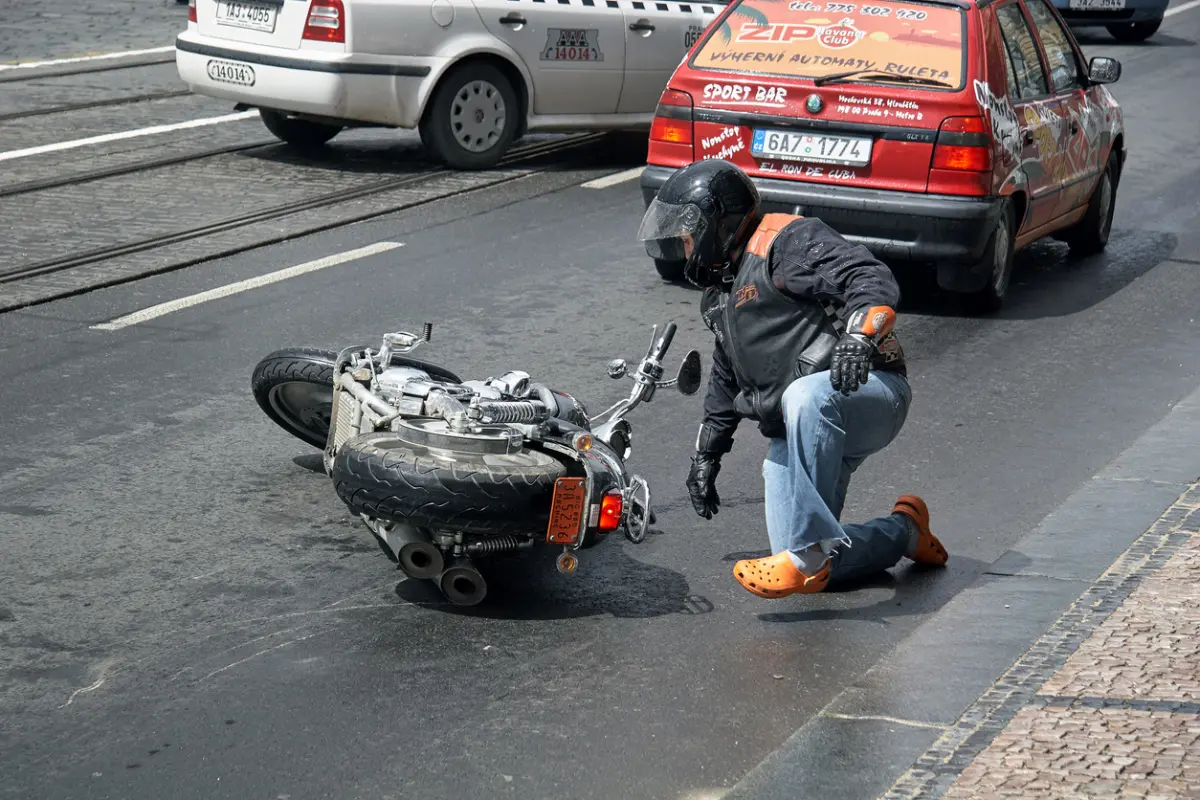


A motorcycle hit-and-run accident is one of the most stressful and disorienting experiences a rider can endure. You’re left to deal with the physical pain of injury, the emotional shock, and the financial burden, often with no one immediately to hold accountable. Understanding your rights, the legal landscape, and the steps you must take after a hit-and-run crash is critical to protecting your well-being and any compensation to which you may be entitled.
Motorcycle riders in San Francisco and throughout California face unique vulnerabilities on the road. If you’ve been injured in a motorcycle hit-and-run, contacting a knowledgeable motorcycle accident lawyer in San Francisco can be the most important decision you make. At Delfino Green & Green, we help injured riders pursue justice, even when the at-fault driver flees the scene.
What Is a Motorcycle Hit and Run?
A hit-and-run accident occurs when a driver leaves the scene of a crash without stopping to identify themselves or assist the injured, despite the legal requirement to immediately stop the vehicle involved. Under California Vehicle Code §20001, all persons operating a vehicle involved in an accident are legally obligated to remain at the scene. Failing to do so is a criminal offense that can result in misdemeanor or felony charges, depending on whether anyone was injured or killed.
For motorcyclists, hit-and-run crashes can be especially devastating due to the lack of protection during impact. Injuries tend to be severe—ranging from fractures to traumatic brain injuries—and the process of identifying the responsible party is often complicated. Drivers are legally required to assist injured persons at the scene, and failing to provide aid can result in additional legal consequences.
Immediate Steps to Take After a Motorcycle Hit and Run
Knowing the steps to take after a motorcycle hit-and-run can significantly affect your recovery, both medically and financially. Acting quickly and deliberately is crucial to protecting your health and legal rights. Here’s what you should do:
- Ensure immediate safety and call 911 – If you’re able to move, get yourself to a safe location off the road. Then call 911 to report the crash and request medical assistance. Emergency responders will assess your injuries and secure the scene, which may also help preserve evidence.
- Accept medical help at the scene or go to the ER – Some injuries from motorcycle accidents—like internal bleeding, concussions, or spinal trauma—don’t appear right away. Always allow paramedics to examine you and follow up with a full medical evaluation. Even minor injuries should be documented and treated, as they can still be significant in a run accident claim. These records will be vital for any future injury claim.
- Document the scene in detail – If it’s safe to do so, take photos and videos of the damage to your motorcycle, the surrounding roadway, your injuries, debris, and skid marks. Note weather conditions, road signs, or anything unusual. Write down the exact time and location, and any identifying features of the other vehicle—even partial license plates or bumper stickers can help.
- Speak to any witnesses – Ask bystanders or other drivers if they saw the crash. Witnesses may have noticed details you missed in the moment, such as the color, make, or direction of the fleeing vehicle. Get their names, phone numbers, and a summary of what they saw.
- File a police report immediately – A police report is essential not only for launching an investigation but also for filing an insurance claim or a civil case. Police reports are a crucial piece of evidence in a motorcycle accident case, supporting your version of events alongside other documentation. When speaking to officers, share everything you remember, no matter how minor it seems. The report will become an official record of your version of events.
- Notify your insurance company – Even if the at-fault driver is unknown, your insurer may offer coverage under uninsured motorist provisions. Review your car insurance policy, especially your uninsured motorist coverage, to understand your options for recovering damages. Provide them with a copy of the police report, medical records, and any photos or witness statements you’ve collected.
- Consult a motorcycle hit and run lawyer in San Francisco – A motorcycle accident lawyer can guide you through the legal process, identify sources of compensation, and help hold the responsible party accountable, whether or not they’ve been located. Insurance adjusters may try to minimize your run accident claim, so having legal representation is important for negotiating a fair settlement and protecting your rights. They’ll also handle negotiations with insurers and help you avoid common pitfalls that could undermine your claim.
Navigating Hit and Run Motorcycle Accidents
The experience of a hit-and-run is deeply unsettling. Beyond the physical injuries, victims often grapple with feelings of anger and helplessness. Serious motorcycle accidents, especially those involving a car or other vehicles, can result in serious or even severe injuries that require extensive medical care. The driver who caused your pain has vanished, seemingly without a trace, leaving you to deal with the consequences. In this chaotic situation, having a clear plan is your most powerful tool.
Your attorney’s priority is to help you understand your legal options and ensure you can focus on your recovery. They will emphasize the importance of creating a detailed record of the incident, which is crucial for building a strong motorcycle accident case or a hit-and-run accident case. This includes obtaining the official police report, meticulously documenting all medical treatments and expenses, and preserving any evidence you were able to gather at the scene. Documenting everything is essential for your accident case, as this file becomes the foundation of your claim.
One of the most pressing concerns for victims is how they will be compensated when the at-fault driver is unknown. Victims who have suffered severe injuries may need additional support and legal expertise to ensure they receive fair compensation. An experienced lawyer will help you explore all potential avenues for recovery. They will act as your advocate, handling all communications with insurance companies and insurance adjusters to prevent them from pressuring you into a lowball settlement.
If the unidentified negligent driver—whether a person driving a car or other vehicles involved in the traffic accident—who caused your motorcycle crash is never found, you may still be able to recover damages. This is often possible through your insurance policy, specifically through your Uninsured Motorist (UM) or Underinsured Motorist (UIM) coverage. Understanding the nuances of your policy is critical, and this is where local legal help for motorcycle crash victims becomes indispensable.
How long do you have to report a hit-and-run in California?
In California, it is imperative to report a hit-and-run accident as soon as possible. While the Vehicle Code requires immediate reporting, the statute of limitations for filing a criminal complaint is generally one year for a misdemeanor and three years for a felony. For your civil claim—the lawsuit you file to get compensation—the clock is also ticking. You must act swiftly to preserve evidence and witness memories.
Does full coverage cover hit-and-run damage?
“Full coverage” is a term that can be misleading. It typically includes collision, comprehensive, and liability coverage. Collision coverage can pay for your motorcycle’s repairs, but it won’t cover your medical bills. To cover injuries caused by an unidentified driver in a motorcycle accident in California, you need Uninsured Motorist Bodily Injury (UMBI) coverage. This is the specific part of your policy designed for these exact situations. It is not automatically included in every policy, so it’s vital to review your coverage with your attorney.
Identifying the Hit-and-Run Driver
While some hit-and-run drivers are never located, many are. You and your legal team can use the following tools:
- Surveillance footage – Traffic cameras or security cameras from nearby homes and businesses can provide vehicle descriptions or plate numbers, helping to identify the vehicle involved, whether it is a car or other vehicles.
- Eyewitness accounts – Witnesses may have seen the vehicle, driver, or direction they fled, or may have observed a car running a red light or committing other traffic violations.
- Accident reconstruction – Experts can piece together how the accident occurred based on physical evidence, skid marks, and debris.
- Social media and public tips – Sometimes, local law enforcement will request public assistance to identify suspects in a hit-and-run.
If the driver is found, you may be able to file a claim with their insurance provider or pursue a personal injury lawsuit.
Holding the Hit-and-Run Driver Accountable
Once identified, a hit-and-run driver may be held liable for your damages through both civil and criminal actions. In a civil case, such as a personal injury case, you can recover compensation for medical costs, lost income, emotional distress, and property damage. Pursuing a fair settlement is crucial to ensure you receive appropriate compensation for your injuries and damages. In some cases, punitive damages may also be awarded to punish egregious conduct.
California allows victims two years from the date of the accident to file a lawsuit against the at-fault driver. However, early legal intervention can improve your chances of locating the driver and preserving evidence.
What Is The Penalty For A Hit And Run In California?
Under the California Vehicle Code, the penalties for a hit-and-run are severe and depend on whether an injury occurred. If there is only property damage, it is a misdemeanor punishable by up to six months in jail and a $1,000 fine. However, if someone is injured, it becomes a “wobbler,” meaning it can be charged as either a misdemeanor or a felony.
Legal consequences are especially serious for drivers who injure persons in a hit and run, with a felony conviction resulting in up to three years in state prison (or four years if the injury is serious or fatal) and fines up to $10,000. These criminal penalties are separate from the civil liability the driver has to you, the victim.
California Statute of Limitations on Hit and Run Accidents
To reiterate, the two most important deadlines are:
- Personal Injury Lawsuit: You have two years from the date of the crash to file a civil lawsuit against the identified driver for your injuries and damages.
- Uninsured Motorist Claim: The deadline to file a claim with your own insurance company is also typically two years, but you must report the accident to the police within 24 hours and to your insurer within a reasonable time (usually 30 days).
Compensation in Hit and Run Accidents
The primary goal of a personal injury claim is to make the victim “whole” again by providing financial compensation, also known as damages, for all losses resulting from the accident. If you are pursuing a run accident claim, working with experienced motorcycle accident lawyers is crucial to maximizing your recovery and ensuring your rights are protected throughout the process. These damages are typically categorized into two types:
- Economic Damages: These are the tangible, calculable financial losses you have suffered. They include all past and future medical bills, the cost of physical therapy and rehabilitation, lost wages from being unable to work, loss of future earning capacity if you are disabled, and the cost to repair or replace your motorcycle.
- Non-Economic Damages: These are the intangible, subjective losses that significantly impact your quality of life. This includes compensation for your physical pain and suffering, emotional distress, anxiety, loss of enjoyment of life, and disfigurement.
Who Is Responsible for Compensating You in a Hit and Run Accident?
Even if the driver isn’t found, victims still have options for financial recovery. Common sources of compensation include:
- The At-Fault Driver: If the driver is identified, their bodily injury liability insurance is the primary source for covering your damages. If your damages exceed their policy limits, you can pursue their personal assets through a lawsuit.
- Your Own Car Insurance Policy: If the driver is never found or is found but has no insurance, review your car insurance policy for Uninsured Motorist (UM) coverage. This is the coverage you pay for to protect yourself in exactly this type of scenario. It acts as a substitute for the at-fault driver’s missing insurance.
- Personal injury protection (PIP) is available
- Health insurance for medical expenses
- MedPay benefits for immediate care
A knowledgeable personal injury law firm will review all available insurance policies and identify the best route to secure compensation for:
- Emergency medical treatment
- Ongoing therapy and rehabilitation
- Lost income and future earning capacity
- Pain, suffering, and loss of enjoyment of life
Why Legal Support Is Crucial
Motorcycle crash victims face uphill battles—physically, emotionally, and legally. Working with a trusted legal team ensures:
- Prompt investigation of the crash
- Access to expert witnesses and accident reconstructionists
- Professional handling of insurance claims
- Legal representation in settlement talks or trial
At Delfino Green & Green, we’ve built a reputation for fighting for injured motorcyclists and holding negligent drivers accountable.
Final Thoughts: What to Do After a Motorcycle Hit and Run
If you’ve been injured in a motorcycle hit-and-run, take action immediately. Report the incident, document the scene, seek medical care, and consult with a legal professional. Whether the driver is found or not, you may still be eligible for significant compensation.
For personalized, compassionate legal guidance from a team that understands the unique challenges of motorcycle accidents, contact Delfino Green & Green today.
We’re here to fight for your recovery—every step of the way.
Disclaimer: This content is for informational purposes only and does not constitute legal advice. For personalized legal assistance, please contact Delfino Green & Green directly.