

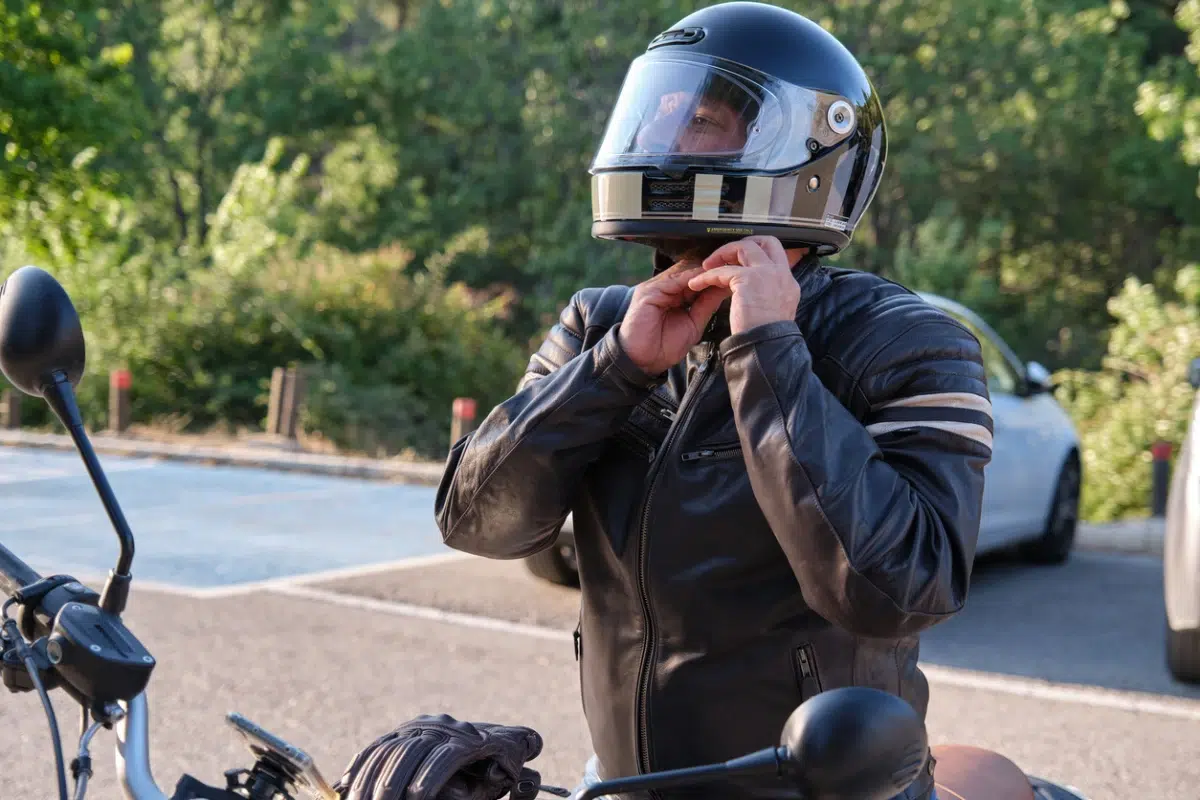


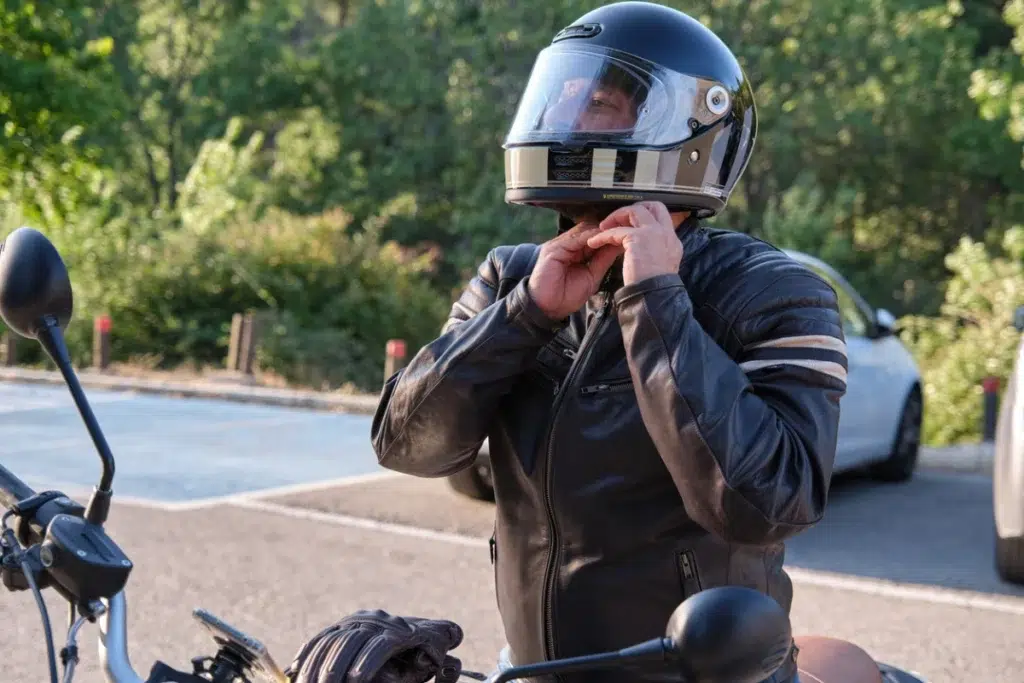
California motorcycle helmet laws require all motorcycle riders and passengers to wear a compliant safety helmet. This regulation is not just about compliance; it’s about reducing fatal injuries and preventing life-altering trauma in motorcycle accidents. Whether you’re navigating San Francisco traffic or taking a scenic ride along Highway 1, the laws are unequivocally clear: all riders and their passengers must wear a U.S. Department of Transportation (DOT)-compliant safety helmet.
This mandate is in place to protect riders from the severe head injuries that are all too common in motorcycle crashes. Beyond the legal requirements, wearing a helmet is a vital safety precaution that has been proven to save lives. If you find yourself injured in any type of vehicle collision, navigating the claims process can be overwhelming, which is why securing representation from a personal injury lawyer is a crucial step toward protecting your interests.
California Motorcycle Helmet Requirements
Under California Vehicle Code (CVC) §27803, it is illegal to operate or ride as a passenger on a motorcycle, motor-driven cycle, or motorized bicycle without wearing a properly secured, U.S. Department of Transportation (DOT)-compliant motorcycle safety helmet. This universal mandate applies to all riders and passengers, regardless of their age, experience level, or the type or size of their vehicle.
To be considered compliant, a helmet must meet federal safety standards and display a visible DOT sticker, typically located on the back of the helmet. However, compliance goes beyond just a sticker. The helmet must be worn properly with the chin strap securely fastened to prevent significant lateral or vertical movement. A loosely worn or improperly secured helmet can easily dislodge during a crash, offering little to no protection when it matters most.
This regulation serves a critical public safety purpose: reducing the risk of traumatic brain injuries and fatal outcomes in motorcycle accidents. Helmets play a pivotal role in absorbing impact energy during collisions, which significantly lowers the likelihood of catastrophic head trauma.
Compliance and Limitations
Importantly, the helmet law in California is not limited to conventional motorcycles. It extends to include motor-driven cycles, scooters, and motorized bicycles—vehicles that might appear less dangerous but still pose serious risks in the event of an accident. Regardless of the engine size or speed capacity, anyone operating a two-wheeled motor vehicle on public roads in California is required to wear a certified safety helmet.
Non-compliance carries both immediate and long-term consequences. In addition to fines and citations, motorcycle drivers who are injured in an accident without a helmet may face increased liability. Under California’s comparative fault rules, failing to wear a helmet could reduce the amount of compensation you’re eligible to receive, even if another party was mostly at fault.
Understanding and adhering to these helmet requirements isn’t just about following the law—it’s a practical and potentially life-saving decision that can also preserve your rights if a crash occurs.
The Importance of Wearing a Helmet
The single most important reason to wear a helmet is to protect yourself from a life-altering head injury. In the event of a bike accident, the rider’s head is extremely vulnerable to impact. A helmet is designed to absorb and dissipate the force of that impact, drastically reducing the chances of a severe traumatic brain injury (TBI), skull fracture, or other fatal injury.
According to the National Highway Traffic Safety Administration (NHTSA) and the Centers for Disease Control and Prevention (CDC), helmets are remarkably effective. They are credited with saving thousands of lives each year and are the most critical piece of safety equipment a rider can use. Riders who wear a DOT-compliant helmet are far less likely to suffer severe injuries, which can lead to permanent disability, cognitive impairment, and a lifetime of medical expenses. In addition to these profound safety benefits, wearing a helmet is a legal obligation in California. Failing to do so not only puts your health at risk but also exposes you to legal and financial penalties.
Types of Acceptable Helmets
While the law mandates a DOT-compliant motorcycle helmet, riders have several options when it comes to style. California’s helmet law accepts full-face, modular, and three-quarter (or open-face) helmets, provided they meet the federal safety standards.
- Full-Face Helmets: These offer the most comprehensive protection, covering the head, chin, and face. The integrated chin bar is a critical safety feature that protects against jaw and facial injuries.
- Modular (or Flip-up) Helmets: A hybrid between full-face and open-face helmets, these feature a chin bar and visor that can be flipped up. They offer the protection of a full-face helmet with the convenience of an open-face design. However, the hinge mechanism can be a structural weak point compared to a true full-face helmet.
- Open-Face (or Three-Quarters) Helmets: These cover the top, back, and sides of the head but leave the face exposed. While they meet the minimum legal requirement, they offer significantly less protection than full-face models, leaving the chin and face vulnerable.
Regardless of the style, a DOT-compliant helmet must have a thick inner polystyrene foam lining. This liner is designed to absorb impact and is a key component of the helmet’s safety system. Riders should always choose a helmet that fits snugly and comfortably, without being too tight. Many riders also opt for a helmet with a face shield to prevent facial injuries from road debris and insects. It’s crucial to remember that not just any helmet will suffice; novelty helmets that do not carry the DOT certification are illegal to wear while riding in California.
Civil Consequences of Not Wearing a Helmet
Failing to wear a helmet doesn’t just put your life at risk—it can also jeopardize your legal and financial standing after a crash.
California follows a comparative fault system. This means that if you’re injured in a motorcycle crash and were not wearing a helmet, your compensation could be reduced, even if another driver was primarily at fault.
For example, if you’re awarded $100,000 in damages but are found 25% at fault for not wearing a helmet, your final compensation would be reduced to $75,000.
Other potential civil consequences include:
- Higher insurance premiums
- Difficulty recovering full damages
- Limited credibility in court
Penalties for Violating the Helmet Law
Violating California’s helmet law carries both financial and legal repercussions. Here’s what you could face:
- Fines: Up to $250 for failing to wear a compliant helmet
- Probation: In some cases, especially for repeat offenders
- Traffic Violations: Citations that can impact your driving record
- License Points: May contribute to suspension or higher insurance rates
The California Highway Patrol actively enforces helmet laws, especially in high-traffic urban centers like San Francisco. Repeated violations could even result in license suspension or more severe penalties.
Exceptions to California’s Helmet Law
California’s motorcycle helmet law under Vehicle Code §27803 is widely regarded as one of the most stringent in the country, applying uniformly to all motorcycle operators and passengers on public roads. However, there are limited circumstances—primarily procedural or situational—where helmet requirements may not strictly apply. These exceptions are narrow and often misunderstood.
- Private Property Riding: The helmet law applies specifically to public roads, highways, and streets. If you are operating a motorcycle exclusively on private property, such as a ranch, race track, or private lot, the helmet requirement may not legally apply. However, the risk of serious injury remains the same, and helmet use is strongly recommended regardless of location.
- Permitted Parades and Exhibitions: Riders may receive a temporary exemption for certain ceremonial or exhibition events—like parades—if they have obtained explicit permission through local or state permits. Law enforcement often works in conjunction with event organizers to establish safety protocols. These events are carefully regulated, and the exemption is typically limited in scope, duration, and geographic coverage.
- Off-Road Use and Recreational Vehicles: While dirt bikes and off-road motorcycles operated in designated off-highway vehicle (OHV) areas may not fall under the helmet requirements of CVC §27803, they are subject to separate helmet mandates enforced by the California Department of Parks and Recreation. Riders should consult the specific regulations for the park or recreational area they are visiting.
- Law Enforcement Discretion and Misapplication: Occasionally, officers may issue citations in error or fail to cite clear violations. This does not amount to a legal exemption but may factor into how a citation is contested in court. It’s important to distinguish between legal exceptions and discretionary enforcement.
Despite these limited exceptions, the practical and medical reasons to wear a helmet remain overwhelmingly strong. Traumatic brain injuries, facial trauma, and spinal damage can occur at any speed and on any terrain.
What to Do if You Have Been in a Motorcycle Accident
The moments after a motorcycle crash are chaotic and stressful, but the steps you take can be critical for your health and any future legal claim.
- Seek Medical Attention Immediately: Your first priority is your health. Even if you feel fine, some serious injuries, like internal bleeding or certain types of head trauma, may not have immediate symptoms. Adrenaline can mask pain. Get evaluated by a medical professional right away.
- Contact Law Enforcement: Call 911 to report the accident. A police report provides an official record of the incident, which is invaluable for an insurance claim.
- Gather Evidence: If you are physically able, document the scene. Take photos of the vehicles, your injuries, road conditions, and any relevant traffic signs. Get the names and contact information of the other driver(s) and any witnesses.
- Do Not Admit Fault: Avoid making statements like “I’m sorry” or “I think I made a mistake.” Stick to the facts when speaking with police and other drivers.
- Contact a Motorcycle Accident Lawyer: Before you speak with an insurance adjuster, consult with an attorney. An experienced lawyer can advise you on your rights and handle communications with the insurance companies on your behalf.
Local Legal Help for Motorcycle Crash Victims
If you’ve been involved in a motorcycle crash in San Francisco or elsewhere in California, don’t try to navigate the legal aftermath alone. Reach out to a trusted motorcycle accident lawyer in San Francisco with a proven track record of handling personal injury claims.
At Delfino Green & Green, we specialize in representing motorcycle crash victims. Our attorneys understand the unique challenges you face, including helmet law compliance, liability issues, personal injury lawsuits, and insurance disputes. We are committed to helping you recover the compensation you deserve.
Conclusion: What Riders Must Know
California’s motorcycle helmet laws serve a dual purpose: to protect lives and to reduce the legal ambiguity following a motorcycle crash. Compliance isn’t optional—it’s essential for your safety and your rights.
Remember:
- DOT-certified helmets reduce the risk of fatal and severe head injuries.
- Failing to wear one can reduce your injury claim compensation.
- Enforcement is strict, especially in urban areas like San Francisco.
Motorcycle safety goes beyond helmets. Riders should also:
- Wear full protective gear
- Keep their bikes in top condition
- Ride defensively
For legal advice after a crash or to better understand your rights under California’s helmet laws, contact the team at Delfino Green & Green. We’re here to help you get back on the road—safely and legally.
Disclaimer: This content is for informational purposes only and does not constitute legal advice. For personalized legal assistance, please contact Delfino Green & Green directly.