



Car accidents can be both physically and financially devastating. From vehicle damage to medical bills and insurance complications, one of the most critical questions after a crash is: How is fault determined in a car accident? Understanding this process is essential if you want to seek compensation for injuries or losses.
In California, the determination of fault is not just about pointing fingers—it’s a process governed by detailed traffic laws, legal standards, and insurance regulations. At Delfino Green & Green, our legal team helps clients navigate this complex landscape. Whether you’re dealing with a minor fender bender or a more serious crash, understanding how fault is established can greatly influence the outcome of your personal injury claim.
California Car Accident Laws: Understanding the “At-Fault” System
California operates under a “fault” or “tort” system for car accidents. This means that the person or parties who are found to be responsible—or “at fault”—for causing the crash are liable for the damages that result. These damages can include everything from property damage to the other party’s vehicle to medical expenses, lost wages, and pain and suffering.
Unlike “no-fault” states, where drivers typically turn to their own insurance policies first regardless of who caused the accident, California law allows you to seek compensation directly from the at-fault driver’s insurance company. The foundation of this system is the legal concept of negligence. In the context of driving, negligence means a failure to use “reasonable care” to prevent harm to others.
Every driver on a California road must operate their vehicle safely and follow traffic laws. When a driver breaches this duty—by speeding, running a red light, or texting while driving, for example—and that breach directly causes an accident, they are considered negligent and therefore at fault.
What is Comparative Fault in a California Car Accident?
California follows a pure comparative fault system, which allows each party involved in a car accident to be assigned a specific percentage of fault. This legal doctrine means that a driver can recover damages even if they are mostly at fault, unlike states that bar recovery beyond a certain fault threshold.
For instance, if Driver A is found to be 25% responsible for a crash and sustains $100,000 in damages, their recoverable compensation will be reduced by that percentage, resulting in a $75,000 payout. This rule applies regardless of the nature of the claim, whether it involves bodily injury, property damage, or both.
Comparative fault is determined through a fact-intensive investigation. Insurance adjusters, attorneys, or a court may review evidence like police reports, traffic violations, surveillance footage, and witness statements to assign proportional liability. In highly contested scenarios, accident reconstruction experts may also be used to clarify what transpired.
This model ensures that fault isn’t an all-or-nothing determination. It can particularly impact multi-vehicle collisions or intersection accidents, with multiple drivers involved who may have acted negligently in different ways.
What is the 49% Rule?
Unlike modified comparative fault jurisdictions that follow a 49% or 50% rule—where a party can’t recover if they’re equally or more at fault—California’s pure model has no such restriction. Even if you are 99% at fault, you are legally entitled to pursue recovery for the remaining 1% of your damages.
This rule has significant implications in cases with unclear or partial fault, such as left-turn collisions or rear-end accidents involving sudden stops. It emphasizes the value of legal representation to advocate for a fair fault assessment and minimize your share of liability.
Ultimately, understanding comparative fault in California can help you better navigate the legal process and make informed decisions about the financial implications of settlements, litigation, and your right to compensation.
Determining Fault: The Investigation Process
So, who decides these percentages? Who decides fault in an auto accident? The determination of fault isn’t made by a single person in a single moment. Rather, it’s the result of an investigative process as insurance companies determine fault and, if necessary, legal professionals. The goal is to piece together the sequence of events leading to the crash using all available evidence.
The evidence used to prove car accident fault can be gathered from several sources:
- Police Report: If law enforcement responded to the scene, the police officer’s report is a critical piece of evidence. It will contain details about the location, time, and conditions of the accident, as well as statements from drivers and witnesses. Crucially, the officer may include their initial assessment of how the accident occurred and which driver violated a traffic law, which can heavily influence an insurer’s decision.
- Physical Evidence: The location of damage on the vehicles often tells a story. For example, damage to the front of one car and the rear of another strongly suggests a rear-end collision. Skid marks on the pavement can indicate braking distance and speed, while debris from the vehicles can pinpoint the area of impact.
- Witness Statements: Independent witnesses who saw the traffic accident can provide an unbiased account of what happened. Their testimony can corroborate your version of events or contradict the other driver’s claims.
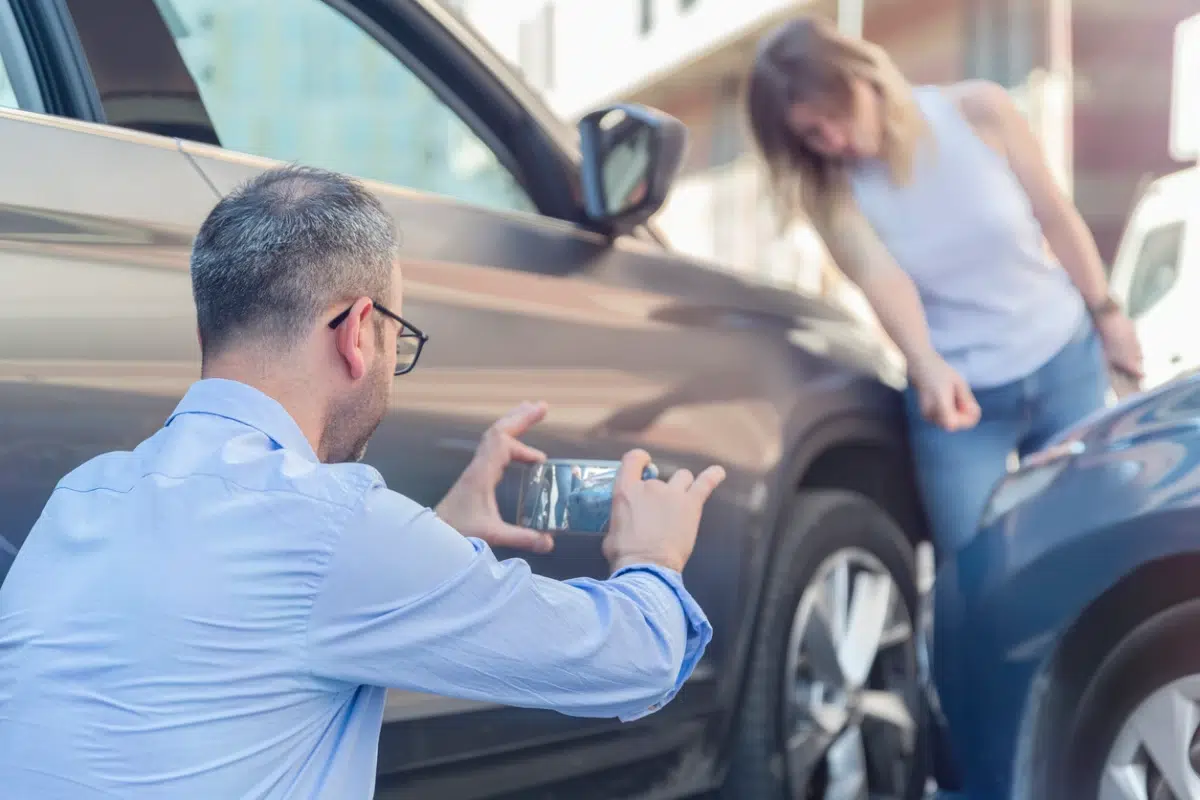
- Photos and Videos: Photographic evidence from the scene is invaluable. Pictures of the vehicles’ positions, the damage, traffic signals, road conditions, and any injuries can help create a clear picture of the incident. Dashcam footage or surveillance video from nearby businesses can serve as definitive proof.
- Driver Statements: The statements you and the other driver make to the police and insurance adjusters will be carefully analyzed. It is crucial to be truthful and stick to the facts, avoiding speculation or admitting fault at the scene.
Who Decides Fault in an Auto Accident?
Initially, insurance companies make the first call on fault. If both parties have insurance, their adjusters conduct a thorough investigation and negotiate to reach a fair settlement. However, courts may ultimately decide if the dispute escalates to litigation.
What if I’m Not Injured? Can You File a Lawsuit for Car Damages Only?
Yes, you absolutely can. Many people mistakenly believe that you can only pursue a legal claim if you’ve suffered a physical injury. However, the at-fault party is responsible for all damages they cause, and this includes property damage. If your vehicle was damaged or totaled in an accident caused by another’s negligence, you have the right to seek compensation for repairs or its fair market value, not just personal injury protection settlements.
This type of claim is known as a vehicle damage claim without personal injury. The car accident claim process in San Francisco for property damage is similar to an injury claim. You will still need to prove the other driver was at fault, and their insurance company immediately investigates before taking financial responsibility. While these non-injury car accident legal options may seem more straightforward, disputes can still arise over the cost of repairs, the value of the vehicle, or liability itself. A law firm can help you navigate the legal system and ensure you receive the full amount needed to repair or replace your car.
Common At-Fault Accident Scenarios
While every accident is unique, certain scenarios have well-established patterns for fault determination based on California car accident liability laws.
- Rear-End Collisions: In the vast majority of rear-end accidents, the driver of the rear vehicle is presumed to be at fault. This is because every driver has to maintain a safe following distance. However, there are exceptions. If the lead driver suddenly slammed on their brakes for no reason, had non-functioning brake lights, or cut off the other driver, they could be found partially or fully at fault.
- Left-Turn Accidents: Accidents that occur when one driver is making a left turn are often complex. A driver turning left has a duty to yield the right-of-way to oncoming traffic. Therefore, the turning driver is frequently found at fault. However, if the non-turning driver was speeding, ran a red light, or was otherwise driving negligently, they could share in the liability.
- Running a Red Light or Stop Sign: When a driver fails to obey a traffic signal, they are almost always found at fault for any resulting collision. The primary challenge in these cases is proving who had the right-of-way. Witness testimony and traffic camera footage are often the deciding factors.
The Insurance Company’s Role in Fault Determination
After an accident is reported, the insurance company’s fault determination process begins. Each driver’s insurer will assign a claims adjuster to the case. The adjuster’s job is to investigate the claim, determine liability, and assess the value of the damages.
The adjuster acts as an investigator, gathering and reviewing all the evidence mentioned above. They will interview their own insured driver, the other driver(s) involved, and any witnesses. They will scrutinize the police report, analyze photos of the damage, and may even visit the accident scene.
Based on this investigation, the adjuster will make a liability determination. It’s important to remember that insurance adjusters, while professional, work for the insurance company. Their goal is often to protect the company’s financial interests, which can mean minimizing the payout on a claim. They may interpret evidence in a way that favors their insured driver or attempt to assign you a higher percentage of fault than you deserve.
This is why having a skilled San Francisco car crash investigation team on your side is so important—a personal injury lawyer can challenge the insurer’s findings and advocate for a fair assessment of liability.
What is the average settlement for a car accident in California?
This is one of the most common questions, but it has no simple answer. Car accident settlement amounts in San Francisco and throughout California vary dramatically based on the specifics of the case. The car crash compensation amount depends on factors like:
- The severity of injuries (if any).
- Total medical expenses (current and future).
- The amount of lost wages.
- The cost to repair or replace the vehicle.
- The presence of shared fault (comparative negligence).
- The strength of the evidence.
A claim involving only minor vehicle damage will be worth far less than one involving serious injuries requiring long-term care. To get the most from a car crash claim in California, it’s essential to meticulously document all your losses.
Getting the Most from a Car Crash Claim in California
To maximize your compensation:
- Document everything: Scene photos, medical evaluations, repair bills.
- Contact an attorney: Especially when injuries are involved or fault is disputed.
- Avoid early settlements: Don’t accept the first offer from insurance without legal review.
Understanding California car crash compensation amounts and having an advocate can help ensure your rights are protected and you receive what you’re truly owed.
Statute of Limitations for Car Accidents in California
Understanding the statute of limitations is critical if you’ve been involved in a car accident in California. These deadlines dictate how long you have to take legal action and can significantly impact your ability to secure compensation.
California law provides the following timeframes:
- Two years from the date of the accident to file a personal injury lawsuit. This includes claims for bodily injuries sustained in the crash, whether minor whiplash or more serious trauma like concussions or spinal damage.
- Three years from the date of the accident to file a property damage claim. This typically applies to the costs of vehicle repair, replacement, or any other property harmed as a result of the collision.
These time limits are strictly enforced. Missing the statute of limitations—even by a day—can result in your case being dismissed, regardless of its merits. Courts rarely grant exceptions unless very specific criteria are met, such as the injured party being a minor at the time of the accident or the discovery of latent injuries.
It’s also important to note that claims against government entities (e.g., if you were hit by a city vehicle or your accident involved poor road conditions maintained by a public agency) have even shorter deadlines—typically just six months to file a notice of claim.
Given the complexity and time sensitivity of these rules, it’s wise to consult with an attorney as soon as possible following a crash. Legal professionals can ensure that all claims are filed within the applicable deadlines, preserve critical evidence, and help you pursue full compensation without procedural setbacks.
Prompt action protects your rights and gives you the strongest chance of a successful outcome.
Traffic Laws and The Duty of “Reasonable Care”
California car accident fault rules are deeply rooted in the state’s traffic laws, outlined in the California Vehicle Code. This code sets the standards for how drivers are expected to behave on the road. A violation of a vehicle code statute—such as speeding, failing to yield, or making an improper lane change—is often considered “negligence per se.” This legal doctrine means that the act of violating the law is, in itself, an act of negligence. If that violation caused the accident, the driver who broke the law is at fault.
Beyond specific traffic laws, every driver in San Francisco and across California has a legal responsibility to exercise “reasonable care.” This is a legal standard that requires a person to act with the same level of caution that an ordinarily careful person would use under the same circumstances.
What does this mean in practice?
- Paying attention to the road and surrounding traffic.
- Not driving while impaired by alcohol, drugs, or fatigue.
- Avoid distractions like using a cell phone.
- Adjusting speed for weather or traffic conditions.
- Maintaining one’s vehicle in safe working order.
A failure to exercise reasonable care, even if it doesn’t violate a specific traffic statute, can be grounds for a finding of negligence and fault.
How Delfino Green & Green Can Help
Determining fault in a car accident is a complex process with significant financial consequences. From understanding the nuances of comparative negligence car crashes in California to fighting back against an insurance company’s lowball offer, the challenges can be overwhelming, especially when you are trying to recover.
At Delfino Green & Green, we understand how overwhelming the car accident insurance claims process in San Francisco can be. From navigating insurance complexities to litigating fault, our team is committed to helping you pursue maximum compensation and providing professional legal advice.
We handle cases involving:
- Non-injury car accidents
- Disputed fault scenarios
- Property damage-only claims
- Complex comparative negligence issues
Contact our experienced attorneys today to discuss your options and secure the compensation you deserve. You can also schedule a free consultation with our San Francisco car accident lawyers and take the first step toward financial recovery.
Disclaimer: This content is for informational purposes only and does not constitute legal advice. For personalized legal assistance, please contact Delfino Green & Green directly.