




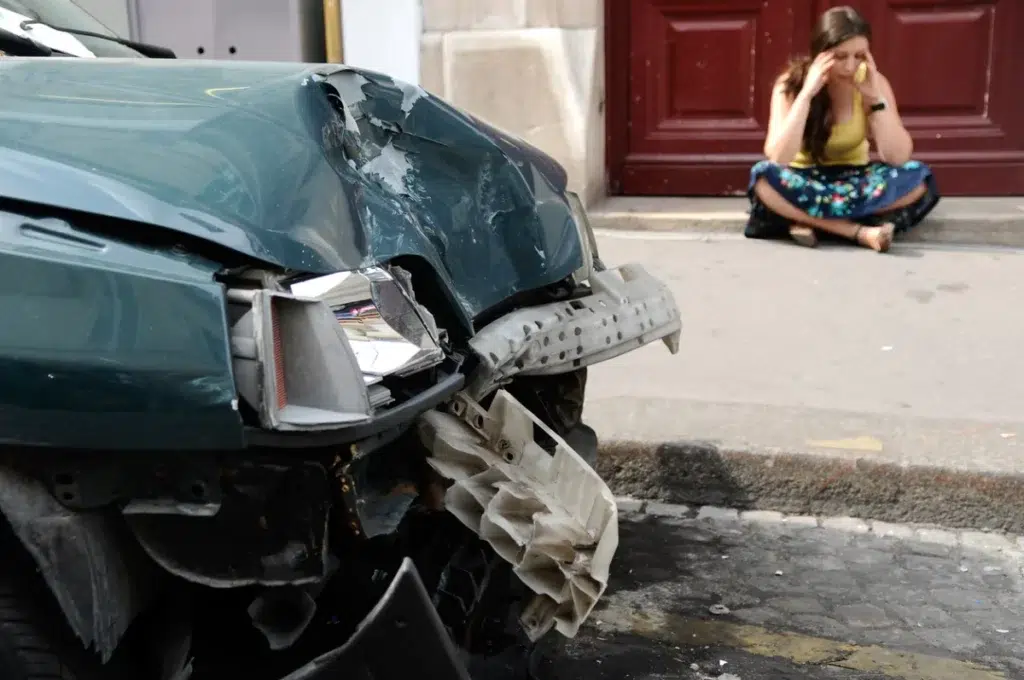
Understanding your rights and the intricate steps of the claims process is your first line of defense. The reality is that while an insurance policy is designed to cover damages, it has a ceiling. When a serious accident occurs, the claims can easily breach that ceiling. This is where navigating the complexities of car accident claims becomes critical. So, what happens when car accident claims exceed insurance limits? And what can you do to protect your rights and assets?
At Delfino Green & Green, our team of seasoned personal injury lawyers has seen firsthand how insurance companies operate. They often prioritize their bottom line, which can mean offering a quick, low settlement that doesn’t begin to cover your actual losses. Knowing how to counter this and explore all available avenues for recovery is key to protecting your financial future. In this article, we explore what it means for a claim to exceed policy limits, how California’s insurance laws work, and what your options are if you’re facing excess damages.
Understanding Car Insurance Policies and Limits
Auto insurance policies are contracts between you and your insurer that outline what types of losses are covered, to what extent, and under what conditions. Each policy includes specific coverage limits, which define the maximum amount the insurer will pay for particular damages. These limits are often categorized per person, per accident, and per type of damage.
In California, state law mandates that all drivers carry minimum liability insurance to operate a vehicle legally. These state-mandated minimums represent the minimum amounts required by California law:
- $15,000 for bodily injury or death to one person
- $30,000 for bodily injury or death to all persons per accident (when more than one person is injured)
- $5,000 for property damage
While these limits satisfy legal requirements and represent only the minimum coverage required, they rarely reflect the true cost of a moderate to severe accident. A single emergency room visit, surgery, or prolonged hospital stay can easily exceed $50,000. If more than one person is injured, or if expensive vehicles or property are involved, the total damages can far outpace what a basic policy will cover.
It’s important to review your policy to ensure you have adequate coverage, not just the minimum amount required by law.
Types of Insurance Coverages
It’s essential to understand the different types of coverage that may be included—or optionally added—to your policy:
- Liability Coverage: This is the foundation of all auto insurance policies. It pays for bodily injury and property damage that you cause to others in an accident where you are at fault. However, it does not cover your own injuries or vehicle damage.
- Collision Coverage: This covers the cost of repairing or replacing your vehicle after a crash, regardless of who was at fault. It’s especially useful in single-vehicle accidents or situations involving uninsured drivers.
- Comprehensive Coverage: This protects against non-collision-related incidents such as theft, vandalism, fire, falling objects, or natural disasters like hail or floods.
- Medical Payments (MedPay): Optional in California, this pays for medical costs for you and your passengers regardless of fault. It can also help with co-pays and deductibles not covered by your health insurance.
- Uninsured/Underinsured Motorist Coverage (UM/UIM): This coverage is critical if you’re hit by a driver who has no insurance or whose policy limits are too low to cover your damages. It can help pay for medical bills, lost wages, and other related losses.
Understanding what each coverage type does—and how much protection it provides—is crucial to protecting yourself financially. Many people assume their insurance will cover all their needs after an accident, only to discover their policy limits are woefully insufficient. Knowing your options and reviewing your policy regularly can help you identify gaps in coverage before a crash occurs. It also empowers you to make informed decisions if you’re ever injured in a car accident and need to pursue compensation beyond the other party’s policy limits.
The Role of Uninsured and Underinsured Motorist Coverage
UM/UIM coverage is not mandatory in California, but it’s highly recommended. It provides a safety net in situations where the at-fault driver lacks sufficient insurance.
- Uninsured motorist (UM) coverage helps when you are hit by an uninsured driver who has no insurance at all.
- Underinsured motorist (UIM) coverage steps in when the at-fault driver’s insurance is insufficient to cover your losses and the other driver is considered one of the underinsured drivers.
If your claim exceeds the at-fault driver’s insurance policy limits, UIM can pay the remaining balance up to your own policy’s limits. For example, if you have $100,000 in UIM and the at-fault driver’s insurance only covers $15,000 of your damages, your UIM could potentially cover the remaining $85,000 gap.
Umbrella Insurance and Car Accident Claims
Some drivers carry umbrella insurance policies that provide additional liability coverage beyond their standard auto policy limits. If the at-fault driver has umbrella coverage, it could offer you a path to recover excess damages.
For example, if their auto policy has a $50,000 limit and they carry a $1 million umbrella policy, that umbrella coverage could be tapped for larger settlements. However, not everyone carries this kind of insurance, and accessing it may require skilled negotiation or legal action.
When Auto Accident Settlements Exceed Insurance Limits
Auto accident settlements often exceed policy limits in cases involving:
- Catastrophic injuries requiring long-term care
- Multiple vehicles or people are injured
- High-value property damage
When the cost of the accident goes beyond the at-fault driver’s policy limits, that person may become personally liable for the difference. For example, if your injuries result in $200,000 in damages and the other driver only has $50,000 in coverage, you may need to pursue the remaining $150,000 through other legal avenues.
Insurance companies often offer low initial settlements. That’s why it’s critical to work with a lawyer who can help you assess whether the offer truly reflects your damages and what options are available beyond the policy limits.
Your Options When Damages Exceed Policy Limits
Finding out that the at-fault driver is underinsured can be incredibly disheartening, but it’s important to know that you may still have several pathways to obtaining the compensation you need. Consulting with an experienced personal injury attorney is crucial to exploring your options and ensuring you are taking the right steps. A strategic approach is vital, and a personal injury attorney or car accident lawyer can help you pursue a higher settlement when your damages exceed the insurance policy limits.
1. Tap into Your Own Underinsured Motorist (UIM) Coverage
This is often the best and most direct route to recovering additional funds. As mentioned, Underinsured Motorist (UIM) coverage is a part of your auto insurance policy designed specifically for this situation.
Here’s how it works: If the at-fault driver’s liability limits are exhausted, but your damages are still not fully covered, you can file a claim with your own insurance company under your UIM policy. Your UIM coverage will then step in to cover the gap, up to your own UIM policy limits.
For example, let’s say your total damages are $100,000. The at-fault driver has a bodily injury liability limit of $30,000. Their insurer pays the full $30,000. If you have a UIM policy with a limit of $100,000, you can then file a claim with your insurer for the remaining $70,000.
It is absolutely essential to review your insurance policy to see if you have this coverage and to understand its limits. In California, insurers are required to offer it, but you can waive it in writing. Opting for high UIM limits is one of the most effective ways to protect yourself and your family from the financial devastation of an accident caused by an underinsured driver.
2. File a Personal Injury Lawsuit Against the At-Fault Driver
As discussed, suing the at-fault party directly is another option. This puts their personal assets at risk after a car crash. If a court awards you a judgment that exceeds their insurance coverage, the at-fault party may be held personally liable for paying the difference. This can be a powerful tool, especially if the at-fault party has significant assets.
However, this path is fraught with complexities:
- Asset Investigation: The first step is determining if the at-fault party has assets worth pursuing. Sometimes, there may be multiple at-fault parties, and each may be investigated for assets, including other drivers, employers, or insurance providers.
- The Legal Process: Lawsuits are time-consuming and can be emotionally draining. They involve legal filings, discovery (exchange of evidence), depositions, and potentially a full trial.
- Collection Risk: Even if you win a large judgment, collecting the money can be difficult. The defendant might declare bankruptcy or attempt to hide assets.
Deciding whether to sue requires a careful cost-benefit analysis. An experienced injury claim lawyer can provide a realistic assessment of your chances of success and the potential for actual recovery.
Negotiate a bad-faith claim
If the insurer fails to act reasonably and in good faith to settle a valid claim within policy limits, you may have grounds for a lawsuit seeking more than the policy amount.
3. Consider Your Health Insurance
While not a source of compensation for pain and suffering or lost wages, your health insurance can be a critical lifeline for covering medical expenses after a crash. Car accident injuries, severe injuries, can result in high medical expenses that may exceed insurance coverage. In many cases, you will use your health insurance to pay for immediate medical treatment.
It’s important to understand the concept of subrogation. If your health insurer pays for your accident-related medical bills, and you later receive a settlement from the at-fault driver’s auto insurance, your health insurer will likely have a right to be reimbursed from that settlement. This process can be complex, especially since accident injuries often require ongoing medical treatment, which can complicate the reimbursement process. A car accident attorney can negotiate with your health insurance company to potentially reduce the amount you have to pay back, maximizing the amount of money that stays in your pocket.
Working with a Car Accident Law Firm in San Francisco
Legal guidance is essential when you’re dealing with excess damages. At Delfino Green & Green, our San Francisco car accident attorneys know how to uncover hidden coverage, investigate the at-fault driver’s financial situation, and fight for maximum compensation. Our firm has extensive experience representing injured victims and car accident victims in complex cases.
Trying to handle a claim that exceeds policy limits on your own is a monumental task. You are recovering from injuries, dealing with financial stress, and now you have to face off against a multi-billion-dollar insurance company and its team of lawyers. This is why partnering with a reputable law firm specializing in auto accidents is so important.
Here’s how a lawyer can help:
- Analyze all insurance policies involved
- Negotiate with insurers to reach a fair settlement
- File claims under UM/UIM or umbrella policies
- Advise whether a lawsuit is a worthwhile pursuit
- Handle communications, paperwork, and deadlines
By having a legal advocate in your corner, you significantly improve your chances of receiving the full compensation you deserve.
Final Thoughts: Protecting Your Rights When Claims Exceed Limits
When damages exceed insurance limits, the path to full compensation becomes more complicated—but not impossible. Understanding California law is crucial when pursuing a personal injury claim or an auto accident settlement that exceeds insurance limits, as state statutes govern insurance policies, minimum coverage requirements, and the legal procedures for seeking additional damages. Knowing your coverage, exploring every avenue for recovery, and working with a trusted legal team can make all the difference.
Whether you’re wondering, “Can you be sued for more than what insurance covers?” or “How excess liability works in auto accidents,” Delfino Green & Green is here to provide clear answers and aggressive advocacy.
Don’t navigate the aftermath of a serious car accident alone. Speak to our lawyers today and learn how to get the most from a car crash claim.
Disclaimer: This content is for informational purposes only and does not constitute legal advice. For personalized legal assistance, please contact Delfino Green & Green directly.